http://english.ahram.org.eg/NewsContent/9/40/55372/Heritage/Ancient-Egypt/After-a-yearbreak,-Khafres-pyramid-and--royal-tomb.aspx
 Dozens of journalists, photographers, TV anchors as well as top government officials at the Ministry of State for Antiquities (MSA) gathered Thursday at a large tent erected at the void area in front of the Khafre pyramid in Giza to celebrate the official re-inauguration of Egypt's second largest pyramid and six Old Kingdom royal and noblemen tombs.
The restored historic site includes the tomb of King Khufu’s granddaughter, along with those of five Old Kingdom noblemen.
The tombs, which were discovered in 1927 by American Egyptologist George Reinser, have been closed for restoration on more than one occasion in the past. In one of those endeavours, a site management plan was implemented at the Giza plateau the early 1990s to preserve these historic treasures.
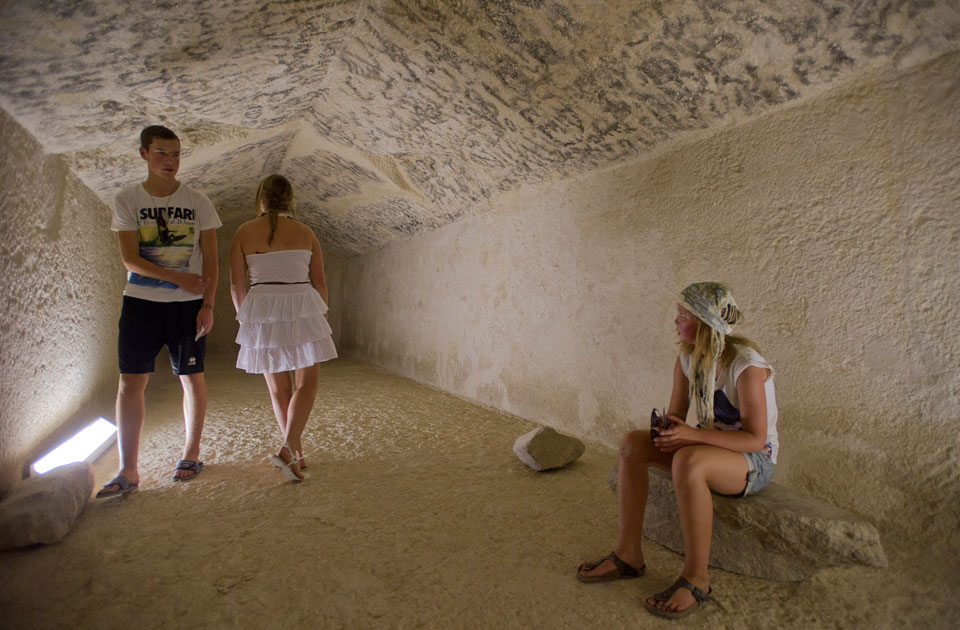
The newly inaugurated tombs are located at the eastern and western side of Giza necropolis. They bear impressive facades, more like temples, and large chambers with rock-hewn pillars.


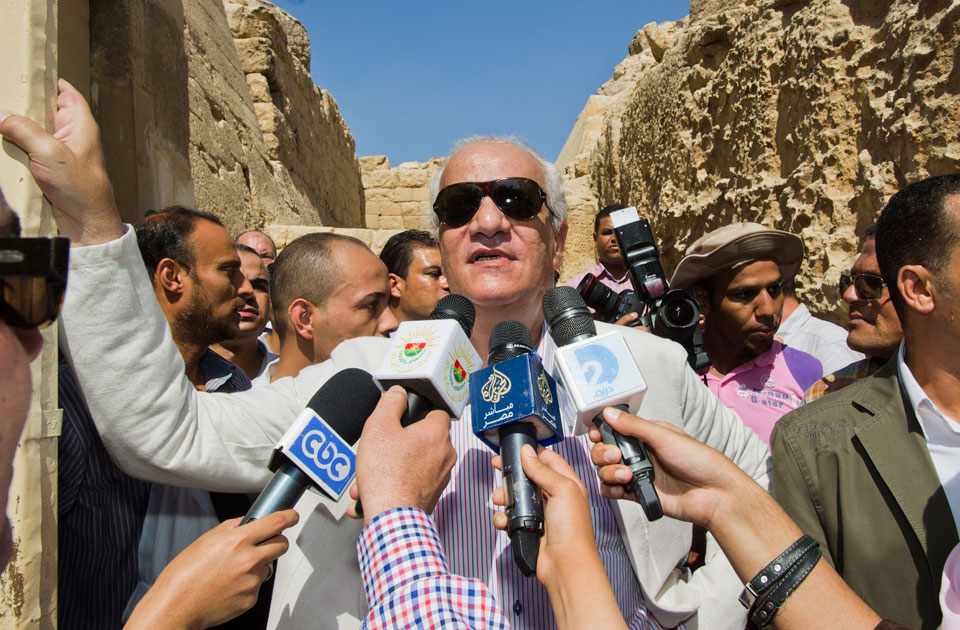
“I am very happy today to reopen these tombs which were closed for more than ten years due to restoration,” an ecstatic MSA chief Mohamed Ibrahim told reporters.
The restored historic site includes the tomb of King Khufu’s granddaughter, along with those of five Old Kingdom noblemen.
The tombs, which were discovered in 1927 by American Egyptologist George Reinser, have been closed for restoration on more than one occasion in the past. In one of those endeavours, a site management plan was implemented at the Giza plateau the early 1990s to preserve these historic treasures.
The newly inaugurated tombs are located at the eastern and western side of Giza necropolis. They bear impressive facades, more like temples, and large chambers with rock-hewn pillars.
“Although these tombs may be sparse in decoration, they are rich in architectural features,” Ali El-Asfar, the director general of Giza antiquities department told Ahram online.
The first tomb, located at the eastern cemetery, which includes the Old Kingdom’s royal tombs, belongs to Princess Mersankh, the granddaughter of the builder of the Great Pyramid King Khufu. This tomb was originally intended for Mersankh's mother, Queen Hetepheres II, but was assigned to the daughter upon her sudden death.
At the time Mersankh's tomb was discovered in 1927, a black granite sarcophagus was found along with a set of Canopic jars, and a limestone statue depicting Queen Hetepheres II embracing the daughter. The sarcophagus stands now at the Egyptian Museum in Cairo while the statue is on display at the Museum of Fine Arts in Boston.
The second tomb, located at the western cemetery, belongs to Seshem-Nefer, the overseer of the two seats of the House of Life and keeper of the king's secrets, and is one of the largest tombs on the Giza Plateau.
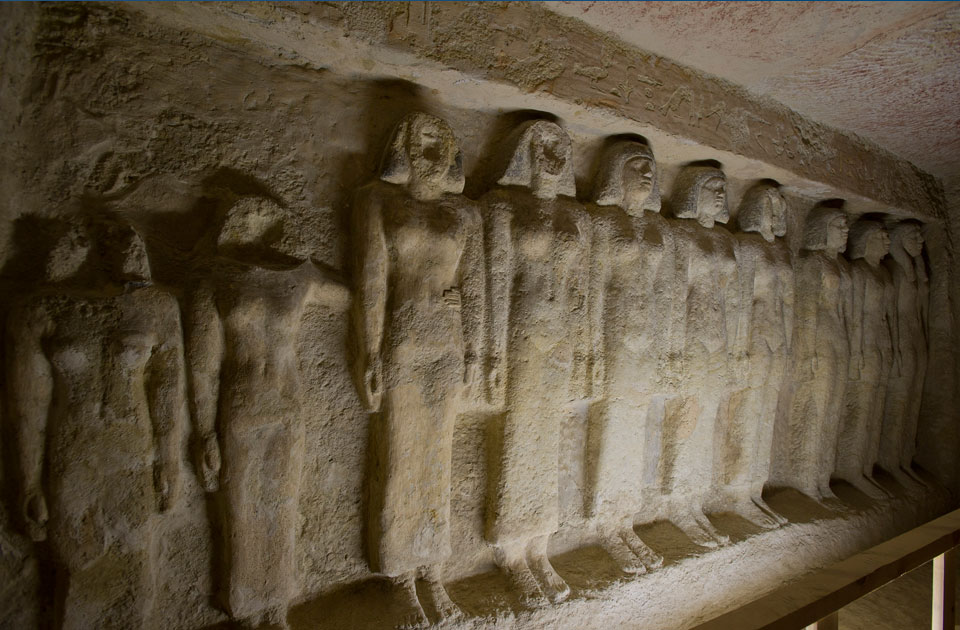
This tomb is decorated with very fine reliefs and painting depicting funerary, hunting and offering scenes, as well as a depiction of the Seshem-Nefer's daily life along with his family and before his deities.
The third tomb belongs to Senefru-Kha-Ef, the king's treasurer and priest of the god Apis. The tomb’s inner walls also reveal typical scenes of the dead official and his children.
The fourth one was constructed for Nefer, the overseer of the soul priests. Its walls are decorated with scenes showing the Nefer's daily life with his family and dog.
The fifth tomb belongs to Yassen, the overseer of the king’s farms.
The sixth tomb was constructed for Ka-Em-Ankh, overseer of the royal treasury. This tomb has very distinguished false doors marked by different titles of the deceased as well as a portrait of him.
Engineer Waad Ibrahim, the head of the engineering department at the MSA, told Ahram online that restoration work aimed at returning these tombs to their original appearance at the day of their discovery.
The MSA discovered through scientific and technical studies that the large volume of visitors over the years had raised levels of humidity inside the structures to dangerous heights up to 80 per cent. These studies showed that each visitor to the pyramids and tombs releases an average of 20 grams of water vapour through perspiration, thus slowly causing damage to the plasters that cover part of the grand gallery. The walls of the Grand Gallery of the pyramid were also found to be covered with up to 2cm of salt minerals which damage the plaster.
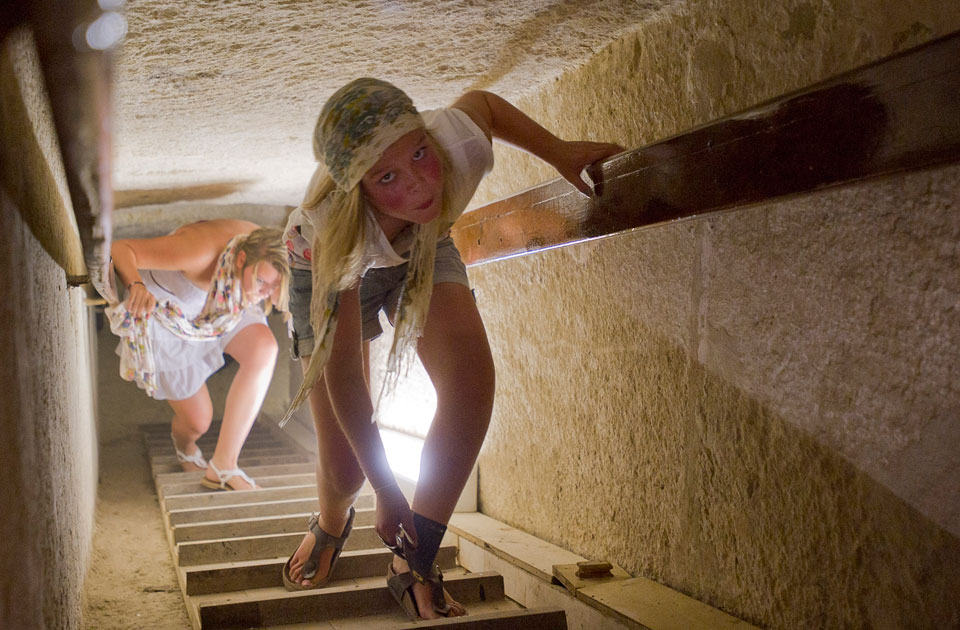
Ibrahim said that the walls of the tombs have been cleaned and reinforced, graffiti left by previous visitors removed and inscriptions and paintings conserved. The ground floors are now protected by wood to preserve the original rock of the tombs as well as to facilitate visiting tours. New lighting and ventilation systems have been installed. A path linking the tombs to the Great Pyramid of Khufu was carved in order to facilitate movement across the plateau.
He told Ahram online that the project cost LE24 million (around $4 million) and complained that the MSA is short on funds to carry out more restoration work on the plateau, to render it more tourist-friendly, and to devise ways to stop horses and camels, popular vehicles among tourists for sightseeing, from disfiguring the plateau’s panorama view.
The MSA aims to open a new gate to the plateau at the Fayoum desert road soon, and to run a fleet of Taftafs (electric wagons) to supplant horses and camels.
As Khafre reopens, the MSA hopes to close Khufu for restoration in order to bring back the old man in a better shape.
At the time Mersankh's tomb was discovered in 1927, a black granite sarcophagus was found along with a set of Canopic jars, and a limestone statue depicting Queen Hetepheres II embracing the daughter. The sarcophagus stands now at the Egyptian Museum in Cairo while the statue is on display at the Museum of Fine Arts in Boston.
The second tomb, located at the western cemetery, belongs to Seshem-Nefer, the overseer of the two seats of the House of Life and keeper of the king's secrets, and is one of the largest tombs on the Giza Plateau.
This tomb is decorated with very fine reliefs and painting depicting funerary, hunting and offering scenes, as well as a depiction of the Seshem-Nefer's daily life along with his family and before his deities.
The third tomb belongs to Senefru-Kha-Ef, the king's treasurer and priest of the god Apis. The tomb’s inner walls also reveal typical scenes of the dead official and his children.
The fourth one was constructed for Nefer, the overseer of the soul priests. Its walls are decorated with scenes showing the Nefer's daily life with his family and dog.
The fifth tomb belongs to Yassen, the overseer of the king’s farms.
The sixth tomb was constructed for Ka-Em-Ankh, overseer of the royal treasury. This tomb has very distinguished false doors marked by different titles of the deceased as well as a portrait of him.
Engineer Waad Ibrahim, the head of the engineering department at the MSA, told Ahram online that restoration work aimed at returning these tombs to their original appearance at the day of their discovery.
The MSA discovered through scientific and technical studies that the large volume of visitors over the years had raised levels of humidity inside the structures to dangerous heights up to 80 per cent. These studies showed that each visitor to the pyramids and tombs releases an average of 20 grams of water vapour through perspiration, thus slowly causing damage to the plasters that cover part of the grand gallery. The walls of the Grand Gallery of the pyramid were also found to be covered with up to 2cm of salt minerals which damage the plaster.
Ibrahim said that the walls of the tombs have been cleaned and reinforced, graffiti left by previous visitors removed and inscriptions and paintings conserved. The ground floors are now protected by wood to preserve the original rock of the tombs as well as to facilitate visiting tours. New lighting and ventilation systems have been installed. A path linking the tombs to the Great Pyramid of Khufu was carved in order to facilitate movement across the plateau.
He told Ahram online that the project cost LE24 million (around $4 million) and complained that the MSA is short on funds to carry out more restoration work on the plateau, to render it more tourist-friendly, and to devise ways to stop horses and camels, popular vehicles among tourists for sightseeing, from disfiguring the plateau’s panorama view.
The MSA aims to open a new gate to the plateau at the Fayoum desert road soon, and to run a fleet of Taftafs (electric wagons) to supplant horses and camels.
As Khafre reopens, the MSA hopes to close Khufu for restoration in order to bring back the old man in a better shape.